
Where a Revolution Was Churned
In the green heart of Anand, Gujarat, stands a building that tells one of India’s most extraordinary stories. The Amul Museum is not merely a gallery of exhibits it is a living tribute to the cooperative ideals that transformed a nation. Here, the intertwined narratives of India’s freedom struggle and milk revolution unfold side by side, showing how the dream of self-reliance found lasting expression in the cooperative movement.
Within its bright halls, the story of Amulborn of necessity and nurtured by solidaritycomes alive through immersive galleries, archival photographs, and audiovisual installations. Each display celebrates the spirit of ordinary milk producers who, united by trust and purpose, helped build one of the world’s most respected dairy cooperatives.
A Museum of People, Purpose, and Progress
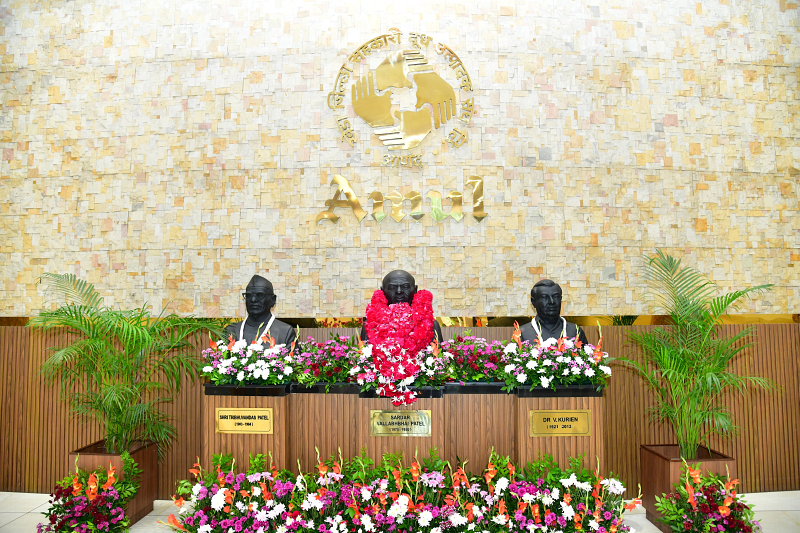
The Amul Museum’s exhibitions trace the rise of a movement that was as social as it was economic. The journey begins with the Kaira District Cooperative Milk Producers’ Union, established in 1946, when local farmers, frustrated by exploitation and middlemen, decided to take control of their livelihoods. Under the visionary guidance of Tribhuvandas Patel and later Dr. Verghese Kurien, their collective effort gave birth to Amula brand that came to symbolize not just quality dairy products, but also India’s experiment in economic democracy. Towering photographic panels and vintage memorabilia recall the early days of milk collection, processing, and distribution. Archival footage shows how a small union of farmers evolved into an industrial giant, powered by the same cooperative principles that fueled India’s struggle for independenceself-reliance, unity, and perseverance.
A Tribute to the Hands Behind the Success
At the heart of the museum lies a humble yet powerful dedicationto the half a million milk producers of Kaira District, whose collective strength turned Amul from a dream into a daily reality.
These men and women, many from small rural households, contributed not just milk but faith in a shared vision. Together, they built not merely an industry, but a movementone that continues to feed millions and sustain rural prosperity across the nation.
The museum’s audio-visual presentation (currently in Hindi) vividly captures this journey, celebrating the cooperative’s early struggles, innovations, and its rise as the symbol of India’s “White Revolution.”
Behind the Scenes: The Two-Hour Guided Tour
A visit to Anand is incomplete without the two-hour guided tour of Amul’s butter and milk powder plants. Visitors witness firsthand the intricate process of transforming raw milk into finished productseach step a testament to precision, innovation, and cooperation. From the rhythmic hum of the cleaning and standardisation lines to the seamless coordination of automated packaging units, every detail reflects the marriage of human labour and advanced technology. It is an experience that reveals how discipline, transparency, and teamwork sustain an enterprise of national scale. Today, Amul operates 78 processing plants and handles over 280 lakh litres of milk each day, transported across India by a fleet of GPS-equipped tankers. Behind these numbers lies a human network of over 3.7 million small and medium-scale producerseach one part of the same story of shared prosperity and cooperative purpose.
Honouring the Architect of the White Revolution
The museum itself was inaugurated on 26 November 2000, a date chosen to mark the 80th birthday of Dr. Verghese Kurienthe man whose vision transformed India’s dairy landscape forever. Known as the Father of the White Revolution and affectionately remembered as the Milkman of India, Dr. Kurien masterminded Operation Flood, often described as “the billion-litre idea.” This monumental programme turned India from a milk-deficient nation into the world’s largest producer of milk, reshaping both rural economies and national nutrition. Dr. Kurien’s influence extended far beyond Amul. His pioneering cooperative model empowered millions of rural families and inspired similar initiatives worldwide. In recognition of his global leadership, he became the first recipient of the Rochdale Pioneers Award, the highest international honour in the field of cooperative enterprise.
A Legacy That Still Nourishes the Nation
Every year, on 26 November, India celebrates National Milk Daya tribute to Dr. Kurien’s enduring legacy and to the movement he built. Within the museum, walls lined with photographs of dignitaries from India and abroad silently testify to the scale of Amul’s global impact. Yet beyond the machinery, numbers, and accolades, the Amul Museum tells a more human story: of farmers who dared to unite, of a leader who taught them to dream, and of a country that learned that true progress flows not from competition, but from cooperation. In Anand, the cradle of the White Revolution, that story continues to be toldnot in words alone, but in every drop of milk that nourishes the nation and every life it uplifts.
Featured Criteria
Criterion 3. Archival, Architectural, or Symbolic Value
Represents milestones in cooperative development. Preserves stories, traditions, or knowledge tied to cooperative evolution.
Criterion 6. Educational Mission
Sites shall actively promote cooperative literacy through exhibitions, archives, guided tours, and programmes that teach the ICA Statement on the Cooperative Identity.
Criterion 13. Networking and International Solidarity
Sites shall connect to cooperative networks—regional, national, and international—participating in exchanges, research, and cooperative tourism to strengthen global cooperative heritage.
Learn More