
The Square of Flowers and Solidarity
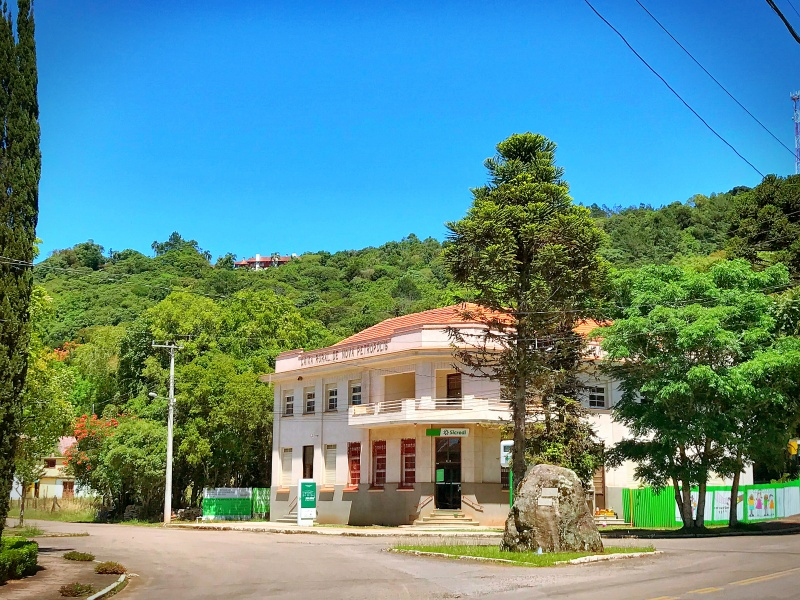
Tucked into the green heart of Nova Petrópolis, in Brazil’s picturesque Serra Gaúcha region, lies the Praça das Flores,a place where beauty, peace, and purpose intertwine. Amid the flowerbeds, trees, and gentle walkways stands a powerful emblem of shared human endeavour: the Monumento ao Cooperativismo.
Created by artist Gustavo Nagler, this striking sculpture depicts seven larger-than-life bronze figures, each carrying a symbolic stone. Together, they represent the collective effort that defines the cooperative spirit,a reminder that progress is achieved not by solitary strength, but by many hands working in unity.
A Tribute to Cooperation and History
The monument holds deep meaning for Nova Petrópolis, a city celebrated as Brazil’s Capital Nacional do Cooperativismo (National Capital of Cooperativism). Inaugurated to commemorate the centenary of Brazil’s first credit union (1902–2002), the sculpture honours a legacy born in this very region,one rooted in solidarity, mutual aid, and community enterprise. Each of the seven figures embodies one of the seven international cooperative principles: voluntary and open membership, democratic governance, member economic participation, autonomy and independence, education and training, cooperation among cooperatives, and concern for the community. The monument is both art and manifesto,a visual declaration that cooperation is a human force built through shared labour and trust.
The Lesson of Theodor Amstad
The inspiration for Nagler’s work traces back to a story told by Theodor Amstad, the Swiss Jesuit priest and cooperative pioneer who founded Brazil’s first rural credit union in 1902. On 25 February 1900, Amstad offered a vivid metaphor that still echoes through Brazil’s cooperative culture:
“If a large stone blocks the path and twenty people try to move it one by one, they will fail; but if they act together under one guide, they will shift the stone and open the way for all.”
The Monumento ao Cooperativismo gives this metaphor physical form. The seven figures, straining together to lift a great stone, make tangible the essence of Amstad’s lesson: that cooperation is not theory but action,muscle, mind, and purpose moving as one.
A Journey Through the Square
Visitors approaching the Praça das Flores are first drawn to the park’s serenity,its colourful blooms, quiet benches, and soft light filtering through trees. At the square’s heart, the monument rises in bronze and stone, commanding attention not through grandeur but through meaning. The figures, representing different professions and walks of life, lift and balance the heavy stone in a moment of shared exertion. Their diversity underscores the cooperative principle of inclusiveness, while their unity captures the strength of common purpose. The sculpture tells a silent story of building, lifting, and freeing,an allegory for what the cooperative movement has always sought to do: raise burdens together and create space for collective progress.
The Spirit of a City and Its People
For Nova Petrópolis, the monument is more than an artwork,it is part of the city’s identity. Cooperation has shaped its institutions, schools, and economy since the arrival of German settlers in the late 19th century, whose community values gave rise to Brazil’s early mutual aid and credit associations. Positioned in the city’s central square, the Monumento ao Cooperativismo ensures that the ideals of mutual help, democratic participation, and community solidarity remain visible in everyday life. School groups, visitors, and residents alike encounter it not as a distant relic, but as a living reminder of what binds them together.
A Symbol Still Relevant Today
In an era often marked by competition, division, and isolation, the monument offers another vision: people leaning together, lifting together, walking together. It asserts that collective well-being grows from shared effort,that hope itself is a cooperative act. Rooted in the migrations, settlements, and cooperative experiments that shaped southern Brazil in the late 19th and early 20th centuries, the spirit of cooperation remains as vital as ever. Nova Petrópolis’ Monumento ao Cooperativismo transforms that heritage into living form,an enduring invitation to build the future not alone, but together.
Featured Criteria
Criterion 1. Historical Significance
Sites must be at least thirty (30) years old, preferably sixty (60), or directly associated with foundational events, milestones, or figures in the cooperative movement.
Criterion 2. Connection to Cooperative Pioneers or Communities
Sites must demonstrate a tangible link to cooperative pioneers, enterprises, federations, or communities that shaped cooperative practice and identity.
Criterion 3. Archival, Architectural, or Symbolic Value
Represents milestones in cooperative development. Preserves stories, traditions, or knowledge tied to cooperative evolution.
Learn More