
List of Tangible Cooperative Cultural Heritages
Explore the cooperative traditions, practices, and knowledge recognized worldwide
Physical places, buildings, settlements, and infrastructure that embody the history and legacy of cooperative enterprise. These include cooperative stores, factories, housing complexes, agricultural facilities, and landscapes directly associated with cooperative activity. Tangible CCH represents the material foundations of cooperation, visible in the built environment and cultural landscapes shaped by cooperative governance.
31 items found
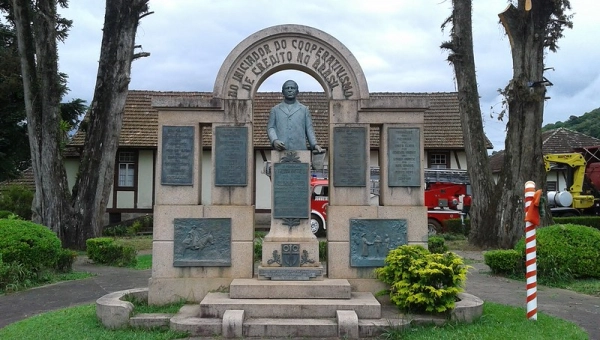

Linha Imperial and Monumento A Força Cooperativa, in Nova Petrópolis
The Square of Flowers and Solidarity Tucked into the green heart of Nova Petrópolis, in Brazil’s picturesque Serra Gaúcha region, lies the Praça das Flores,a place where beauty, peace, and purpose intertwine. Amid the flowerbeds, trees, and gentle walkways stands a powerful emblem of shared human endeavour: the Monumento ao Cooperativismo. Created by artist Gustavo Nagler, this striking sculpture depicts seven larger-than-life bronze figures, each carrying a symbolic stone. Together, they represent the collective effort that defines the cooperative spirit,a reminder that progress is achieved not by solitary strength, but by many hands working in unity. A Tribute to Cooperation and History The monument holds deep meaning for Nova Petrópolis, a city celebrated as Brazil’s Capital Nacional do Cooperativismo (National Capital of Cooperativism). Inaugurated to commemorate the centenary of Brazil’s first credit union (1902–2002), the sculpture honours a legacy born in this very region,one rooted in solidarity, mutual aid, and community enterprise. Each of the seven figures embodies one of the seven international cooperative principles: voluntary and open membership, democratic governance, member economic participation, autonomy and independence, education and training, cooperation among cooperatives, and concern for the community. The monument is both art and manifesto,a visual declaration that cooperation is a human force built through shared labour and trust. The Lesson of Theodor Amstad The inspiration for Nagler’s work traces back to a story told by Theodor Amstad, the Swiss Jesuit priest and cooperative pioneer who founded Brazil’s first rural credit union in 1902. On 25 February 1900, Amstad offered a vivid metaphor that still echoes through Brazil’s cooperative culture: “If a large stone blocks the path and twenty people try to move it one by one, they will fail; but if they act together under one guide, they will shift the stone and open the way for all.” The Monumento ao Cooperativismo gives this metaphor physical form. The seven figures, straining together to lift a great stone, make tangible the essence of Amstad’s lesson: that cooperation is not theory but action,muscle, mind, and purpose moving as one. A Journey Through the Square Visitors approaching the Praça das Flores are first drawn to the park’s serenity,its colourful blooms, quiet benches, and soft light filtering through trees. At the square’s heart, the monument rises in bronze and stone, commanding attention not through grandeur but through meaning. The figures, representing different professions and walks of life, lift and balance the heavy stone in a moment of shared exertion. Their diversity underscores the cooperative principle of inclusiveness, while their unity captures the strength of common purpose. The sculpture tells a silent story of building, lifting, and freeing,an allegory for what the cooperative movement has always sought to do: raise burdens together and create space for collective progress. The Spirit of a City and Its People For Nova Petrópolis, the monument is more than an artwork,it is part of the city’s identity. Cooperation has shaped its institutions, schools, and economy since the arrival of German settlers in the late 19th century, whose community values gave rise to Brazil’s early mutual aid and credit associations. Positioned in the city’s central square, the Monumento ao Cooperativismo ensures that the ideals of mutual help, democratic participation, and community solidarity remain visible in everyday life. School groups, visitors, and residents alike encounter it not as a distant relic, but as a living reminder of what binds them together. A Symbol Still Relevant Today In an era often marked by competition, division, and isolation, the monument offers another vision: people leaning together, lifting together, walking together. It asserts that collective well-being grows from shared effort,that hope itself is a cooperative act. Rooted in the migrations, settlements, and cooperative experiments that shaped southern Brazil in the late 19th and early 20th centuries, the spirit of cooperation remains as vital as ever. Nova Petrópolis’ Monumento ao Cooperativismo transforms that heritage into living form,an enduring invitation to build the future not alone, but together.

International Labour Organization (ILO) Cooperative, Social and Solidarity Economy Unit
A Century of Global Cooperation and Shared Heritage Few institutions have carried the spirit of cooperation into the international sphere as faithfully and persistently as the International Labour Organization’s Cooperative and Social and Solidarity Economy (SSE) Unit. Established in 1920, only a year after the founding of the ILO itself, this small but pioneering office has, for over a century, safeguarded and promoted the values of democracy, self-help, solidarity, and Self responsibility as guiding principles of work and development. Origins in a Time of Reconstruction In the aftermath of the First World War, the world faced profound social and economic dislocation. The newly created ILO founded under the Treaty of Versailles (1919) was designed to give workers, employers, and governments a shared voice. Importantly, the ILO Constitution explicitly included “co-operators” among its key constituents, placing them at the heart of international labour dialogue. The organization’s first Director-General, Albert Thomas, a visionary social reformer and long-time advocate of the cooperative movement, was himself a member of the International Co-operative Alliance (ICA) Central Committee. Thomas believed that social justice depended on democratic ownership and that cooperative enterprise was not merely an economic mechanism, but a cultural movement essential to peace and human progress. Under his direction, the ILO became the first international institution to establish a dedicated Cooperative Section now known as the Cooperative and SSE Unit. Building the Foundations of Cooperative Policy Throughout the 1920s and 1930s, the Cooperative Unit undertook comparative research, advised governments on cooperative legislation, and supported education programmes linking labour rights to cooperative principles. Its experts travelled widely from rural Europe to Asia, Africa, and Latin America helping to shape cooperative law and practice across emerging economies. The Unit’s work continued after the Second World War, when cooperatives became key tools for reconstruction, food security, and local economic recovery. During the decolonization era, the Unit’s guidance helped many newly independent nations design their first cooperative development policies, often using them as vehicles for self-reliance and social inclusion. Recommendation No. 193,A Milestone for the 21st Century In 2002, the ILO reaffirmed its century-old commitment to cooperation with the adoption of ILO Recommendation No. 193 on the Promotion of Cooperatives. This landmark text, drafted under the leadership of the Cooperative Unit remains the most comprehensive international framework for cooperative development. Recommendation 193 recognizes cooperatives as “autonomous associations of persons united voluntarily to meet their common economic, social and cultural needs through a jointly owned and democratically controlled enterprise.” It urges governments to create supportive legal environments and to integrate cooperative education into national strategies. Today, it serves as a global touchstone for legislation, education, and policy in over a hundred countries. The 100th Anniversary: Celebrating a Century of Cooperation In 2020, the Cooperative Unit celebrated its centenary marking 100 years of continuous service to the global cooperative movement. The occasion was commemorated through the publication of A Century of Cooperation, international symposia, and a virtual global gathering uniting cooperators, policymakers, and ILO staff. The celebration reaffirmed the enduring relevance of the cooperative model in addressing contemporary challenges such as climate change, digital transformation, and economic inequality. The Unit also curated an online historical exhibition highlighting key moments: Albert Thomas’s leadership in the 1920s, cooperative recovery work in post-war Europe, the drafting of Recommendation 193, and the integration of the cooperative agenda into the United Nations 2030 Sustainable Development Goals. Through these initiatives, the ILO emphasized that cooperative principles remain vital tools for building inclusive economies. A Living Heritage of Solidarity Today, the Cooperative and Social and Solidarity Economy Unit stands not just as a technical office, but as a living monument to international cooperation. It serves as a bridge between local movements and global policy, between history and innovation. By integrating cooperatives into the heart of the decent-work agenda, it continues to advance the ideal that economies can be democratic, fair, and community-owned. For any effort to chart the world’s cooperative cultural heritage, the ILO Cooperative/SSE Unit in Geneva is a keystone. It anchors 100 years of cooperative advocacy, policymaking, and education an enduring symbol that when people unite through shared ownership and shared purpose, they shape a fairer, more peaceful world.
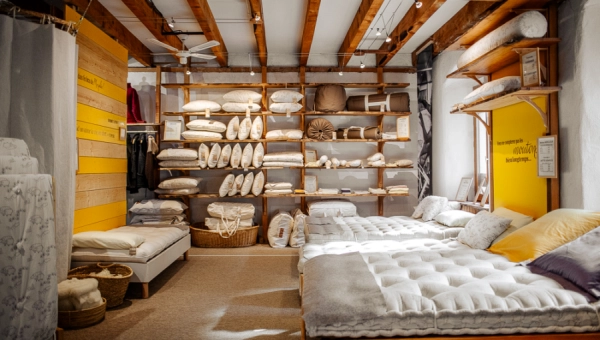
Ardelaine and the Spirit of Collective Work, France
A Cooperative of Place, People & Purpose Nestled in the mountainous heart of France’s Ardèche region, the cooperative SCOP Ardelaine emerged in 1982 as a bold response to economic decline, rural exodus and the erosion of local industry. Founded on the site of a former wool-spinning mill in the village of Saint-Pierreville, Ardelaine set out to reclaim a local resource,the wool of regional sheep,and to turn it into a socially-just, ecologically-grounded enterprise. From Fleece to Fabric: Crafting Local Value In the early years, the cooperative focused on reviving the wool supply chain: sheep shearing, sorting, washing, carding, spinning, and finally producing mattresses, duvets, blankets, garments and children’s textiles,all from local fleece. The conscious choice to work in short circuits (circuit-court), processing wool locally and selling directly to consumers, remains central. By anchoring production in-house and region-based, Ardelaine kept value in the territory, prevented depopulation, and offered meaningful employment in a remote area. A Cooperative Model That Lives Its Values What makes Ardelaine distinctive is not only what it produces, but how it is governed. From the outset the enterprise chose the SCOP (Société Coopérative et Participative) model, in which employees are also co-owners: they hold the majority of capital, they elect their management, and decisions are made democratically,one person, one vote.In Ardelaine’s own words: “Dans une SCOP … les salariés sont les associés majoritaires et [...] les décisions stratégiques sont l’expression du plus grand nombre.” Profit-sharing also reflects the cooperative ethos: at Ardelaine, when there is surplus, 45 % goes to all employees, 45 % into reserves for the enterprise’s sustainability, and 10 % to shares held by the co-owners. Salaries are tightly ranged (a ratio of about 1.2 between highest and lowest) to reflect respect, complementarity and mutual trust rather than hierarchical divide. Territory, Heritage and Regeneration Ardelaine is more than a factory; it is a territorial cooperative. Set in the Parc Naturel Régional des Monts d’Ardèche, the site draws thousands of visitors annually to its museum of wool, guided tours, creative workshops, café-bookstore and shop of pure-wool products. By repurposing a former industrial site in a remote rural region, Ardelaine contributed to local regeneration,creating jobs, revitalising the village, embracing tourism, and strengthening links between craft, ecology and community. Why “Vive le Collectif”? Ardelaine’s narrative is grounded in the belief that cooperation is not just an economic form but a cultural practice. In the section titled “Vive la coopération!”, the cooperative lays out the cooperative principles it embraces: voluntary and open membership, democratic control by members, economic participation, autonomy and independence, education/training, cooperation among cooperatives, and concern for community. These are not abstract ideals: at Ardelaine they have concrete consequences. Decisions are transparent, management is collegially elected, capital is fixed so the enterprise cannot be subject to speculative takeover, and the mission is centred on remettre l’économie au service de l’humain (“placing the economy back at the service of humanity”). The Cooperative Movement in Action Walking through the workshops, the store, and the museum at Saint-Pierreville, one sees more than wool and machines. One sees a collective culture of work: people who share responsibility, contribute to decision-making, and value the well-being of the whole. The enterprise spans production, retail, tourism, training and territory. It shows that cooperatives can be flexible, diversified and modern, while remaining rooted in local environment and democratic governance. In a world dominated by globalised supply-chains, anonymous capital and remote ownership, Ardelaine stands as a reminder that another way is possible,one where economic activity is embedded in community, where value is shared, where people are owners not just workers, and where ecology, craft and cooperation converge.

America ’s Credit Union Museum
A Historic Home with a Living Legacy In the quiet heart of Manchester, New Hampshire, at 418–420 Notre Dame Avenue, stands a modest three-story home that helped shape a national movement. Today, this residence is the America’s Credit Union Museum,a living archive built on the very site where the United States’ first credit union was founded in 1908. Once the home of Joseph Boivin, who volunteered as the first manager of the St. Mary’s Cooperative Credit Association, the house now stands as a beacon of financial democracy and community solidarity. Under the leadership of Monsignor Pierre Hevey, and with guidance from Canadian pioneer Alphonse Desjardins, this small parish initiative in a French-Canadian immigrant community planted the seeds of what would become a nationwide cooperative movement. A Museum with a Mission Walking through the museum today, visitors sense immediately that this is more than a collection of historical objects. According to its mission, “America’s Credit Union Museum is the soul of an unwavering national movement of people helping people.” The first floor transports guests to the early years, 1908–1933, depicting how immigrant workers turned the idea of mutual aid into a functioning financial cooperative. Authentic artifacts, handwritten ledgers, and vintage photographs bring the story to life. The second floor continues from 1934 onward, chronicling milestones such as the creation of the Credit Union National Association (CUNA) and the passing of the Federal Credit Union Act, which established the legal framework for the cooperative banking system across the United States. Together, the exhibits reveal how a local act of solidarity evolved into a movement serving millions. The Birth of a Movement At the turn of the 20th century, Manchester’s French-Canadian mill workers faced daily hardship. Conventional banks were beyond their reach, and informal lending often meant exploitation. Monsignor Hevey, recognizing both the material needs and the moral strength of his parishioners, sought a new model,one grounded in trust, self-help, and shared responsibility. With Boivin’s commitment and Desjardins’ mentorship, the St. Mary’s Cooperative Credit Association opened its doors in November 1908. The credit union’s guiding principle was simple yet revolutionary: people helping people. Members pooled their modest savings, made affordable loans, and discovered collective dignity through cooperation. That first act of faith became the cornerstone of a national tradition. The very walls of Boivin’s home,where ledgers were kept, coins counted, and decisions made,still resonate with the determination of those early pioneers. Honouring the Unsung Builders America's Credit Union Museum, Manchester, New Hampshire Kenneth C. Zirkel - Own work Beyond documenting the past, the museum looks boldly to the future. Its educational programs, rotating exhibits, and archival initiatives ensure that the cooperative message continues to inspire new generations. Among its most powerful projects is “Unsung Heroes,” a storytelling initiative that honours individuals whose dedication and leadership sustained the credit union movement from behind the scenes. These were the tellers, volunteers, organizers, and educators who, in the museum’s own words, “built the movement by the sweat of their brows.” Their stories remind visitors that the strength of a cooperative lies not in profit, but in people. From Preservation to Inspiration The building itself carries history in its bricks. In 1996, it was listed on the National Register of Historic Places, officially recognizing its role in the social and economic fabric of America. A major restoration followed, funded by the SMB Charitable Foundation and other organizations, culminating in the museum’s grand opening in 2002. This transformation turned an ordinary home into an extraordinary educational space,a place where visitors can not only learn about credit union history, but also reflect on the values that sustain it: trust, equality, and collective progress. A Symbol of Cooperative Resilience Today, the America’s Credit Union Museum continues to expand its reach through digital archives, community partnerships, and national exhibits. It serves not just as a keeper of memories, but as a beacon for modern cooperators, reminding them that the movement’s foundation rests on empathy and shared purpose. From the moment one steps inside, the atmosphere feels both intimate and monumental. The creak of the wooden stairs, the sepia photographs, and the preserved meeting room all whisper the same timeless truth,when people unite for common good, they build something that lasts. Here, in this humble New England home, the promise of financial justice was first spoken aloud. And from that single spark in 1908, a light spread across the nation,illuminating a path of cooperation that continues to guide millions of Americans today.
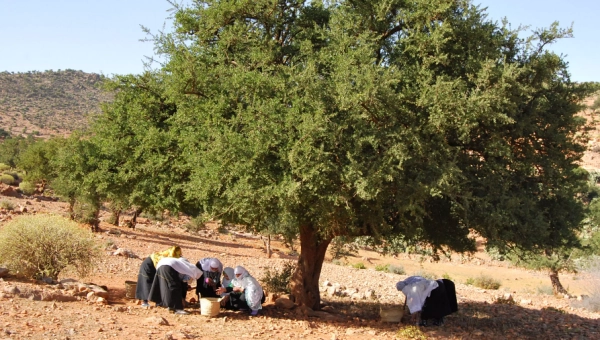
Seeds of Hope: Women, Argan, and the Cooperative Spirit of Morocco
Where the Argan Trees Whisper In the sun-sculpted landscapes of southwestern Morocco, where ancient argan trees trace the contours of desert hills, a quiet revolution began. The argan tree, a symbol of endurance, had long been the lifeblood of these arid landsits oil prized for centuries for nourishment, healing, and beauty. Yet for generations, the women who harvested and cracked its hard nuts labored in silence, their work unrecognized and their potential untapped. Then, in the mid-1990s, under the guidance and mentorship of Professor Zoubida Charrouf, a new idea took root in the small town of Tamanar. The Amal Cooperativeits name meaning “Hope”was born. It became the first argan oil cooperative fully managed by women, transforming an ancestral practice into a symbol of empowerment and sustainability. Targanine: A Beacon of Quality and Ethics Standing alongside Amal is Targanine, a pioneering federation of women’s cooperatives in the Essaouira region. Targanine gathers hundreds of women from surrounding villages, united by a commitment to quality, traceability, and environmental stewardship. Here, fair trade principles meet ecological awareness. The cooperative ensures that every bottle of argan oil represents not exploitation, but empowermentproviding income, preserving biodiversity, and reinforcing the role of women as stewards of their land. Through Targanine, Moroccan argan oil gained international recognition not just for its purity, but for the human values infused within it. Amal Cooperative: The Dawn of a Movement Collection of the fruits of the argan tree by women in festive atmospheres © Direction du patrimoine culturel, Maroc, 2013 Amal began as a modest gathering of women determined to turn their skill into self-sufficiency. Through training, fair wages, and shared ownership, they transformed their lives and, in time, their entire community. What had once been an informal cottage activity evolved into a model of ethical production and social solidarity. Visitors to Tamanar today can walk through the cooperative’s sunlit workrooms, where women sit in a rhythmic harmonycracking argan nuts, pressing oil, bottling Morocco’s famed “liquid gold.” Each gesture is both ancient and newly empowered, a dance of patience, precision, and pride. Amal’s success inspired dozens of similar initiatives, proving that economic equality could grow from the very soil of tradition. Amal’s story also lives on through its sister cooperatives in Tidzi and Mesti, spreading its mission across the argan forest. Together, they form a living network of resiliencewomen working for women, protecting their ecosystem, and securing a sustainable future for their families. Al Amal of Ighrem: Hope in the Anti-Atlas Further south, beneath the ochre slopes of the Anti-Atlas Mountains in Ighrem, another chapter unfolded. Founded in 1991, the Al Amal Cooperative emerged from a community of predominantly Berber women living amid vast argan groves shimmering under desert light. Before its creation, opportunities were few. Women carried the weight of domestic life without access to education or income. But through the cooperative, they found both livelihood and voice. The production and trade of argan oil became a means to build confidence, education, and solidaritya pathway from dependency to dignity. Today, Al Amal stands as proof that even in the most remote villages, collective action can transform circumstance into strength. Families have been uplifted, children educated, and the once-quiet village economy now hums with activity and pride. The Argan Tree’s Living Legacy Across Tamanar, Essaouira, and Ighrem, the argan cooperatives are more than producersthey are custodians of a legacy. They embody the balance between people and nature, tradition and innovation, self-reliance and community care. Through the hands of these women, the argan tree continues to whisper its timeless message: that hope, when shared, becomes powerand from the heart of the Moroccan desert, that power can bloom into prosperity.

Dairy Plants of Anand Milk United Limited (AMUL) and the Verghese Kurien (Dairy) Museum, India
Where a Revolution Was Churned In the green heart of Anand, Gujarat, stands a building that tells one of India’s most extraordinary stories. The Amul Museum is not merely a gallery of exhibits it is a living tribute to the cooperative ideals that transformed a nation. Here, the intertwined narratives of India’s freedom struggle and milk revolution unfold side by side, showing how the dream of self-reliance found lasting expression in the cooperative movement. Within its bright halls, the story of Amulborn of necessity and nurtured by solidaritycomes alive through immersive galleries, archival photographs, and audiovisual installations. Each display celebrates the spirit of ordinary milk producers who, united by trust and purpose, helped build one of the world’s most respected dairy cooperatives. A Museum of People, Purpose, and Progress The Amul Museum’s exhibitions trace the rise of a movement that was as social as it was economic. The journey begins with the Kaira District Cooperative Milk Producers’ Union, established in 1946, when local farmers, frustrated by exploitation and middlemen, decided to take control of their livelihoods. Under the visionary guidance of Tribhuvandas Patel and later Dr. Verghese Kurien, their collective effort gave birth to Amula brand that came to symbolize not just quality dairy products, but also India’s experiment in economic democracy. Towering photographic panels and vintage memorabilia recall the early days of milk collection, processing, and distribution. Archival footage shows how a small union of farmers evolved into an industrial giant, powered by the same cooperative principles that fueled India’s struggle for independenceself-reliance, unity, and perseverance. A Tribute to the Hands Behind the Success At the heart of the museum lies a humble yet powerful dedicationto the half a million milk producers of Kaira District, whose collective strength turned Amul from a dream into a daily reality. These men and women, many from small rural households, contributed not just milk but faith in a shared vision. Together, they built not merely an industry, but a movementone that continues to feed millions and sustain rural prosperity across the nation. The museum’s audio-visual presentation (currently in Hindi) vividly captures this journey, celebrating the cooperative’s early struggles, innovations, and its rise as the symbol of India’s “White Revolution.” Behind the Scenes: The Two-Hour Guided Tour A visit to Anand is incomplete without the two-hour guided tour of Amul’s butter and milk powder plants. Visitors witness firsthand the intricate process of transforming raw milk into finished productseach step a testament to precision, innovation, and cooperation. From the rhythmic hum of the cleaning and standardisation lines to the seamless coordination of automated packaging units, every detail reflects the marriage of human labour and advanced technology. It is an experience that reveals how discipline, transparency, and teamwork sustain an enterprise of national scale. Today, Amul operates 78 processing plants and handles over 280 lakh litres of milk each day, transported across India by a fleet of GPS-equipped tankers. Behind these numbers lies a human network of over 3.7 million small and medium-scale producerseach one part of the same story of shared prosperity and cooperative purpose. Honouring the Architect of the White Revolution The museum itself was inaugurated on 26 November 2000, a date chosen to mark the 80th birthday of Dr. Verghese Kurienthe man whose vision transformed India’s dairy landscape forever. Known as the Father of the White Revolution and affectionately remembered as the Milkman of India, Dr. Kurien masterminded Operation Flood, often described as “the billion-litre idea.” This monumental programme turned India from a milk-deficient nation into the world’s largest producer of milk, reshaping both rural economies and national nutrition. Dr. Kurien’s influence extended far beyond Amul. His pioneering cooperative model empowered millions of rural families and inspired similar initiatives worldwide. In recognition of his global leadership, he became the first recipient of the Rochdale Pioneers Award, the highest international honour in the field of cooperative enterprise. A Legacy That Still Nourishes the Nation Every year, on 26 November, India celebrates National Milk Daya tribute to Dr. Kurien’s enduring legacy and to the movement he built. Within the museum, walls lined with photographs of dignitaries from India and abroad silently testify to the scale of Amul’s global impact. Yet beyond the machinery, numbers, and accolades, the Amul Museum tells a more human story: of farmers who dared to unite, of a leader who taught them to dream, and of a country that learned that true progress flows not from competition, but from cooperation. In Anand, the cradle of the White Revolution, that story continues to be toldnot in words alone, but in every drop of milk that nourishes the nation and every life it uplifts.

Sunchales
A City Built on Solidarity In the heart of Argentina’s Santa Fe province, surrounded by the green expanse of the Pampas, stands the city of Sunchales,proudly known as the Capital Nacional del Cooperativismo, the National Capital of Cooperativism. More than a city, Sunchales is a living expression of a century-old movement that has shaped Argentina’s rural and economic identity. Its streets, institutions, and monuments bear witness to a lasting belief: that true progress flourishes when communities work together. The Rise of Dairy Cooperatives By the late 1920s, as the surrounding region evolved into one of Argentina’s most productive dairy zones, Sunchales witnessed the rise of milk-producers’ cooperatives. The first associations appeared around 1929, bringing local farmers together to process and market their milk collectively. This shift marked the beginning of a profound transformation in the local economy. Over time, these cooperatives expanded into large-scale enterprises. Among the most prominent are SanCor Cooperativas Unidas Ltda., which became one of Argentina’s leading dairy producers, and Grupo Sancor Seguros, now one of the nation’s foremost insurance cooperatives. These organizations not only anchored the city’s economic growth but also embodied its cooperative soul,enterprises built not on profit alone, but on mutual trust and shared prosperity. The Origins of Mutual Aid The cooperative spirit in Sunchales began long before Argentina enacted formal laws on cooperation. In 1891, groups of Italian immigrants who had settled in the region founded sociedades de socorro mutuo,mutual aid societies that provided support in times of illness, loss, or need. These small, community-based associations were rooted in solidarity and shared responsibility. They represented the first local expressions of cooperative organization, predating Argentina’s first Cooperative Law of 1926 by more than three decades.Through these early mutual aid groups, immigrants found not only practical support but also belonging. They created institutions that mirrored their values,mutual help, fairness, and collective progress,and planted the seeds of a cooperative tradition that would come to define Sunchales itself. A National Recognition In recognition of Sunchales’ deep cooperative heritage, the Argentine National Congress passed Law 26.037 in 2005, officially designating the city as the Capital Nacional del Cooperativismo. The declaration affirmed what history had already made evident: Sunchales stood as a beacon for cooperative enterprise across Latin America. A year later, in 2006, the city unveiled its most emblematic landmark,the Monumento Nacional al Cooperativismo. Situated at the intersection of Avenida Yrigoyen and General Paz, the monument stands as a striking symbol of the city’s spirit and ideals. The Monument to Cooperation The monument’s design features eight towering concrete pillars, each representing one of the universal principles of cooperation: Peace, Help, Equity, Justice, Freedom, Solidarity, and Responsibility. The eighth pillar, painted in a blend of the others’ colors, symbolizes unity within diversity,a visual reminder that cooperation is not uniformity, but harmony among differences. Beyond its symbolic form, the monument functions as a gathering place for reflection, dialogue, and celebration. Every July, Sunchales hosts national and international events to mark the International Day of Cooperatives, attracting visitors from across Argentina and neighboring countries who come to honor the enduring power of collective action. Cooperation as a Way of Life Today, Sunchales’ cooperative values extend well beyond its monument. Cooperative education is woven into local schools, teaching new generations the principles of mutual aid and democratic participation. Youth-led initiatives flourish alongside established enterprises, ensuring that the cooperative ethos remains vibrant and forward-looking. The city’s institutions, from its banks to its cultural centers, continue to reflect a model of shared responsibility. Cooperation here is not merely a historical idea,it is a daily practice, a civic habit, and a cultural inheritance passed from one generation to the next. A Living Philosophy Standing before the Monumento Nacional al Cooperativismo, one feels both the weight of history and the promise of renewal. The eight pillars rise like a chorus, their colors blending under the Pampas sky, reminding all who visit that unity and diversity can coexist in pursuit of a common good. Sunchales is not only the capital of cooperativism in name but in essence,a city where the past’s collective struggles meet the future’s shared dreams. It stands as a testament to a simple, enduring truth: that community is humanity’s greatest source of strength.

Moshi Co-operative University
A University at the Foot of a Mountain At the foot of majestic Mount Kilimanjaro, in the lively town of Moshi, stands Moshi Co-operative University (MoCU),a unique institution where education, cooperation, and community empowerment converge. The campus, framed by the mountain’s snow-capped peak and the bustle of Sokoine Road, hums with purpose. Here, students do not merely pursue degrees; they cultivate a mindset of collective progress. Founded on 5 January 1963 as the Co-operative College Moshi, the institution’s mission was clear from its first day: to train human resources for Tanzania’s growing cooperative sector under the Ministry of Co-operatives and Community Development. As the cooperative movement expanded, so too did the college’s scope. In 2004, it evolved into Moshi University College of Co-operative and Business Studies (MUCCoBS), and a decade later, in 2014, it achieved full university status as MoCU,a national and regional leader in cooperative education. A Tradition Rooted in Place Moshi’s location gives MoCU a special resonance. The Kilimanjaro region has a long and proud cooperative history, especially in agriculture and coffee production. Early cooperative unions such as the Kilimanjaro Native Co-operative Union (KNCU) helped shape Tanzania’s economic landscape, and MoCU continues that legacy by educating the next generation of cooperative leaders. The physical setting reinforces this connection. From the campus, Mount Kilimanjaro rises like a guardian above the plains,a daily reminder that ambition must be grounded in community, just as the mountain’s snowy summit depends on its strong base. Students often speak of the landscape as symbolic of MoCU’s mission: to reach great heights while remaining deeply rooted in shared purpose. “Ushirika ni Biashara” – Co-operation is Business MoCU’s guiding motto, Ushirika ni Biashara,Co-operative is Business,captures its distinctive philosophy. The university teaches that cooperatives are not just instruments of social welfare; they are viable, responsible enterprises capable of driving sustainable development. This principle is woven through the institution’s governance, academic programmes, and student culture.Every initiative on campus reflects the cooperative spirit: mutual aid, democratic participation, and accountability. Students learn that success in business and community life depends not on competition alone but on collaboration, shared values, and collective responsibility. Learning for Leadership and Service MoCU offers a wide range of academic programmes,certificate, diploma, bachelor’s, master’s, and doctoral degrees,in fields such as cooperative management, business economics, microfinance, community development, and information technology. But what distinguishes MoCU from a conventional university is its integration of cooperative principles into every discipline. Coursework and field training emphasize both technical competence and social ethics. Students learn the mechanics of savings and credit society management, bookkeeping for cooperatives, marketing, and enterprise development, alongside modules that explore equity, gender participation, and governance. Group work and community projects mirror real cooperative practice, ensuring that graduates are ready to apply theory in tangible ways. Beyond the Classroom MoCU’s influence extends far beyond its urban campus. The university maintains 13 regional offices across Tanzania, spreading cooperative education and consultancy to rural and underserved communities. Through research centres and outreach programmes, it partners with local cooperatives, NGOs, and government agencies to foster entrepreneurship, improve financial literacy, and strengthen the cooperative movement nationwide. Students frequently take part in field assignments where they help rural groups establish microfinance initiatives, design sustainable agricultural ventures, or manage cooperative societies. These experiences forge strong ties between academic learning and community transformation. A Movement in Motion More than a university, MoCU is a hub of innovation and renewal for the cooperative sector. Its graduates now serve across Tanzania and beyond,as managers, educators, development officers, and social entrepreneurs,carrying forward the belief that economic growth and social equity can progress hand in hand. When students walk along the shaded paths of campus, debate in lecture halls, or work together on community trust projects, they are engaging with an idea larger than themselves. Each classroom discussion and field exercise contributes to a living movement rooted in solidarity and collective advancement. From its beginnings as a small college in 1963 to its present role as a national institution, Moshi Co-operative University continues to embody Tanzania’s cooperative spirit,teaching that the power of education, when joined with cooperation, can move mountains.
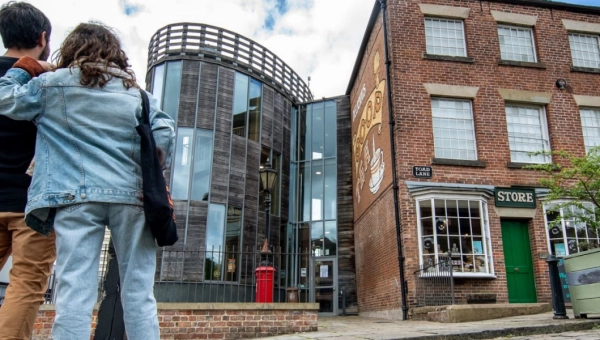
The Rochdale Pioneers’ Musuem
The Modest Beginning at Toad Lane In the industrious town of Rochdale, England, stands a simple red-brick building at 31 Toad Lane,a site that changed the course of social enterprise. On 21 December 1844, twenty-eight weavers and artisans, weary of exploitation and poor-quality goods, united to form the Rochdale Society of Equitable Pioneers. Their small shop offered fair prices, honest weights and measures, and quality goods,values revolutionary for the time.From this humble experiment emerged the Rochdale Principles, a framework that came to define cooperative practice across the world: voluntary and open membership, democratic control, member economic participation, education, cooperation among cooperatives, and concern for the community. Holyoake House and the National Co-operative Archive Just a short journey away, in the centre of Manchester, lies Holyoake House on Hanover Street,the home of the National Co-operative Archive. Together with the museum, it forms part of Britain’s “Co-operative Quarter,” preserving the intellectual and cultural legacy of the movement. Completed in 1911 in honour of reformer George Jacob Holyoake, the building reflects the movement’s commitment to education and social progress. Within its walls are manuscripts, rare books, periodicals, photographs, and films documenting the cooperative journey from the 19th century to the present. Researchers, students, and visitors explore subjects ranging from early retail societies and wartime contributions to the roles of women, cooperative education, and the international spread of mutual aid. The archive provides a deeper, documentary dimension to the experience of Toad Lane,revealing how cooperative ideals adapted through industrialisation, global expansion, and the challenges of modern consumerism. The Rochdale Pioneers Museum Today, that same site is home to the Rochdale Pioneers Museum, managed by the Co-operative Heritage Trust. It combines the original 18th-century warehouse,once the Pioneers’ store,with a modern exhibition space that connects visitors to nearly two centuries of cooperative history. Inside, one finds a faithful recreation of the original shop counter and shelves, allowing visitors to step back into the moment when cooperative trade first took form. The museum’s exhibits unfold the story of ordinary working people who built a fairer economic model through solidarity. Displays of ledgers, weighing scales, household items, and correspondence trace how a simple consumer shop evolved into a vast network of cooperative societies. Themes such as retail innovation, social reform, and international solidarity are explored through interactive displays and archival artefacts.The building itself, Grade II listed, stands as a national monument to social enterprise,its modest architecture a powerful reminder that great ideas often begin in the simplest of places. A Shared Heritage of Innovation and Equality Together, the Rochdale Pioneers Museum and the National Co-operative Archive tell a seamless story. The museum preserves the original spark,the first shop, the first members, the first principles,while the archive chronicles the fire it ignited across time and continents. Both are run by the same trust, reinforcing a shared mission: to protect, interpret, and celebrate the living legacy of cooperation. Visiting Toad Lane is not simply an exercise in nostalgia. Standing behind the recreated shop counter, one senses the courage of those first twenty-eight Pioneers,workers who dared to believe that fairness, education, and shared ownership could transform society. The archive in Manchester deepens that experience, providing the evidence of their impact,the handwritten ledgers, the advertisements, the photographs,proof that their idea endured and evolved. The Spirit That Endures From Rochdale’s small storefront to Holyoake’s Manchester archive, the cooperative movement’s journey mirrors a universal truth: that collective effort can achieve what individual ambition alone cannot. These heritage sites remind us that the pursuit of equity and dignity in economic life is not a relic of the past but a living challenge for every generation. In Toad Lane’s quiet rooms and Holyoake House’s reading halls, the same message resonates still,that cooperation, born of necessity, remains one of humanity’s most hopeful ideas.
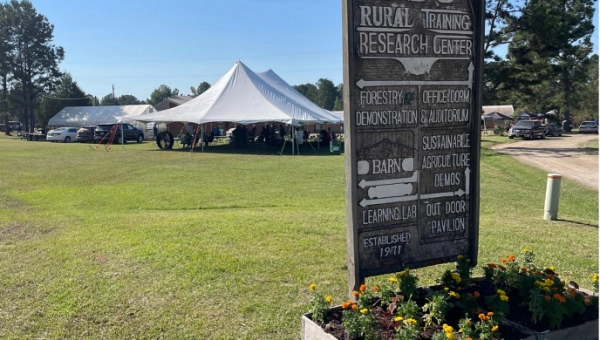
The Federation of Southern Cooperatives Rural Training & Research Center
A Legacy of Land, Liberation, and Cooperative Power Across the rural landscapes of the American South, the struggle for land and dignity has long been a defining chapter in the story of African American resilience. Out of that struggle grew the Federation of Southern Cooperatives / Land Assistance Fund (FSC/LAF). Founded in 1967, at the height of the Civil Rights Movement, the Federation was created by Black farmers, landowners, and cooperative organizers who saw economic justice as inseparable from civil rights. Their mission was, and remains, clear and courageous: to save Black-owned land and build self-sustaining, community-owned enterprises in regions where structural inequality and discrimination had long denied them both. Roots in Resistance and Solidarity The Federation was born out of both necessity and vision. Following the Voting Rights Act of 1965, many Black farmers in the South faced economic retaliation, including foreclosure and denial of credit. Guided by the principle that “cooperation is our way out,” the FSC/LAF was established as a regional cooperative association uniting local credit unions, marketing co-ops, housing cooperatives, and farmer associations. It gave families access to credit, agricultural training, and legal support; it fought discriminatory lending practices; and it built an enduring network of rural cooperatives stretching across Alabama, Mississippi, Georgia, South Carolina, and beyond. Land as Legacy Land has always been at the heart of the Federation’s struggle. In the century following emancipation, Black farmers had gained ownership of over 14 million acres of land, yet by the mid-20th century, that number had fallen by more than 90 percent due to systemic racism, predatory practices, and lack of access to legal and financial resources. The Land Assistance Fund , created as part of the Federation’s work, became a lifeline for families facing foreclosure. Through technical assistance, cooperative development, and advocacy, it has helped thousands retain ownership of their land and pass it on to future generations. A Movement and a Model For nearly six decades, the Federation has been a cornerstone of the Black cooperative tradition, one that stretches back to the mutual aid societies of the 19th century. Its influence has reached far beyond the South: shaping discussions on land justice, food sovereignty, and racial equity in national and international forums. The Federation has received recognition from the United Nations, the International Cooperative Alliance, and the U.S. Department of Agriculture, yet its greatest achievement is the quiet power of collective resilience—families keeping their land, cooperatives thriving, and communities governing themselves with dignity. Why It Belongs on the Cooperative Cultural Heritage Map Civil Rights roots: It grew directly out of the struggle for racial and economic justice in the 1960s. Land and legacy: It protects one of the most endangered forms of ownership,Black family land. Cooperative leadership: It has inspired generations of African American cooperators, advocates, and community builders. Cultural and educational significance: Its training center in Alabama serves as a living museum of cooperative thought and practice. Enduring Significance Today, the Federation of Southern Cooperatives / Land Assistance Fund remains a vital institution, continuing to fight for land retention, sustainable agriculture, and cooperative self-reliance. It reminds us that cooperation is not only an economic tool,it is an act of freedom. Through shared ownership, education, and solidarity, the Federation has shown the world that land can be more than property: it can be a platform for justice, heritage, and hope. For anyone mapping the world’s cooperative cultural heritage, the Federation stands as a beacon,a living monument to the idea that ownership, when shared, can liberate.