
A Historic Home with a Living Legacy
In the quiet heart of Manchester, New Hampshire, at 418–420 Notre Dame Avenue, stands a modest three-story home that helped shape a national movement. Today, this residence is the America’s Credit Union Museum,a living archive built on the very site where the United States’ first credit union was founded in 1908.
Once the home of Joseph Boivin, who volunteered as the first manager of the St. Mary’s Cooperative Credit Association, the house now stands as a beacon of financial democracy and community solidarity. Under the leadership of Monsignor Pierre Hevey, and with guidance from Canadian pioneer Alphonse Desjardins, this small parish initiative in a French-Canadian immigrant community planted the seeds of what would become a nationwide cooperative movement.
A Museum with a Mission
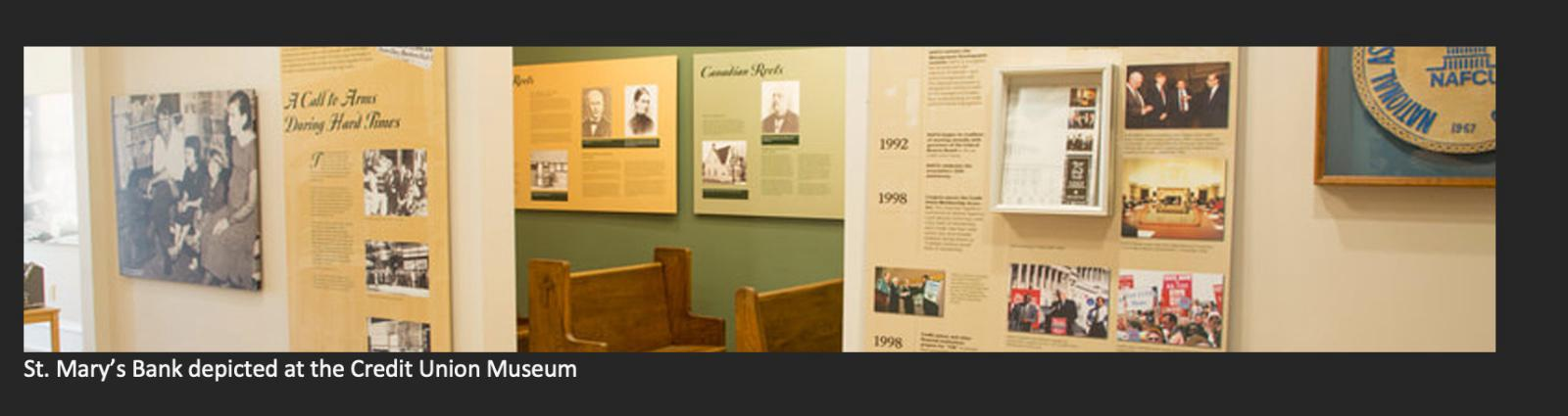
Walking through the museum today, visitors sense immediately that this is more than a collection of historical objects. According to its mission, “America’s Credit Union Museum is the soul of an unwavering national movement of people helping people.” The first floor transports guests to the early years, 1908–1933, depicting how immigrant workers turned the idea of mutual aid into a functioning financial cooperative. Authentic artifacts, handwritten ledgers, and vintage photographs bring the story to life. The second floor continues from 1934 onward, chronicling milestones such as the creation of the Credit Union National Association (CUNA) and the passing of the Federal Credit Union Act, which established the legal framework for the cooperative banking system across the United States. Together, the exhibits reveal how a local act of solidarity evolved into a movement serving millions.
The Birth of a Movement
At the turn of the 20th century, Manchester’s French-Canadian mill workers faced daily hardship. Conventional banks were beyond their reach, and informal lending often meant exploitation. Monsignor Hevey, recognizing both the material needs and the moral strength of his parishioners, sought a new model,one grounded in trust, self-help, and shared responsibility.
With Boivin’s commitment and Desjardins’ mentorship, the St. Mary’s Cooperative Credit Association opened its doors in November 1908. The credit union’s guiding principle was simple yet revolutionary: people helping people. Members pooled their modest savings, made affordable loans, and discovered collective dignity through cooperation.
That first act of faith became the cornerstone of a national tradition. The very walls of Boivin’s home,where ledgers were kept, coins counted, and decisions made,still resonate with the determination of those early pioneers.
Honouring the Unsung Builders
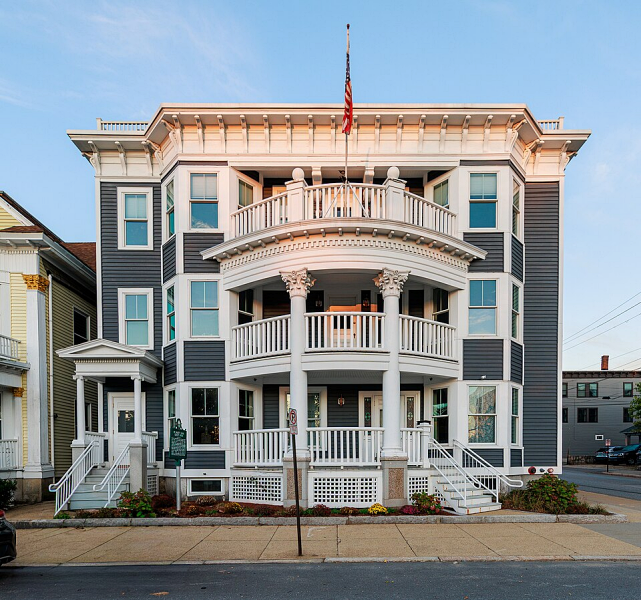 America's Credit Union Museum, Manchester, New Hampshire Kenneth C. Zirkel - Own work
Beyond documenting the past, the museum looks boldly to the future. Its educational programs, rotating exhibits, and archival initiatives ensure that the cooperative message continues to inspire new generations. Among its most powerful projects is “Unsung Heroes,” a storytelling initiative that honours individuals whose dedication and leadership sustained the credit union movement from behind the scenes. These were the tellers, volunteers, organizers, and educators who, in the museum’s own words, “built the movement by the sweat of their brows.” Their stories remind visitors that the strength of a cooperative lies not in profit, but in people.
From Preservation to Inspiration
The building itself carries history in its bricks. In 1996, it was listed on the National Register of Historic Places, officially recognizing its role in the social and economic fabric of America. A major restoration followed, funded by the SMB Charitable Foundation and other organizations, culminating in the museum’s grand opening in 2002. This transformation turned an ordinary home into an extraordinary educational space,a place where visitors can not only learn about credit union history, but also reflect on the values that sustain it: trust, equality, and collective progress.
A Symbol of Cooperative Resilience
Today, the America’s Credit Union Museum continues to expand its reach through digital archives, community partnerships, and national exhibits. It serves not just as a keeper of memories, but as a beacon for modern cooperators, reminding them that the movement’s foundation rests on empathy and shared purpose. From the moment one steps inside, the atmosphere feels both intimate and monumental. The creak of the wooden stairs, the sepia photographs, and the preserved meeting room all whisper the same timeless truth,when people unite for common good, they build something that lasts. Here, in this humble New England home, the promise of financial justice was first spoken aloud. And from that single spark in 1908, a light spread across the nation,illuminating a path of cooperation that continues to guide millions of Americans today.
Featured Criteria
Criterion 1. Historical Significance
Sites must be at least thirty (30) years old, preferably sixty (60), or directly associated with foundational events, milestones, or figures in the cooperative movement.
Criterion 2. Connection to Cooperative Pioneers or Communities
Sites must demonstrate a tangible link to cooperative pioneers, enterprises, federations, or communities that shaped cooperative practice and identity.
Criterion 11. Visibility and Symbolism
Sites shall enhance the visibility of cooperation in public spaces through monuments, plaques, murals, and symbolic interpretation integrated within broader heritage narratives.
Learn More