
A Century of Global Cooperation and Shared Heritage
Few institutions have carried the spirit of cooperation into the international sphere as faithfully and persistently as the International Labour Organization’s Cooperative and Social and Solidarity Economy (SSE) Unit. Established in 1920, only a year after the founding of the ILO itself, this small but pioneering office has, for over a century, safeguarded and promoted the values of democracy, self-help, solidarity, and Self responsibility as guiding principles of work and development.
Origins in a Time of Reconstruction
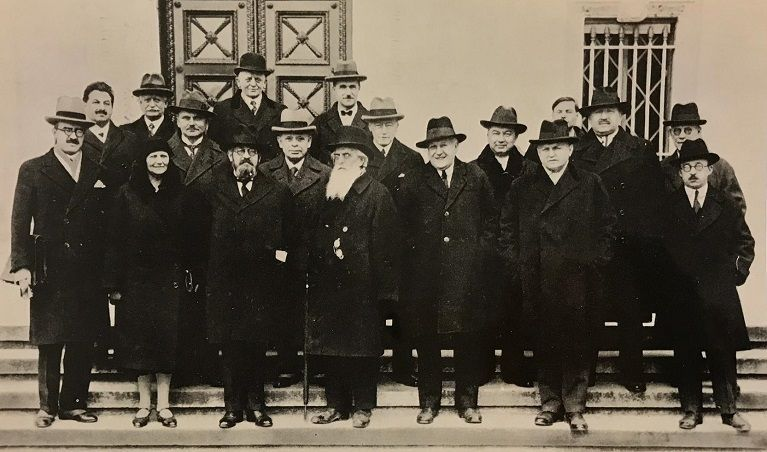
In the aftermath of the First World War, the world faced profound social and economic dislocation. The newly created ILO founded under the Treaty of Versailles (1919) was designed to give workers, employers, and governments a shared voice. Importantly, the ILO Constitution explicitly included “co-operators” among its key constituents, placing them at the heart of international labour dialogue. The organization’s first Director-General, Albert Thomas, a visionary social reformer and long-time advocate of the cooperative movement, was himself a member of the International Co-operative Alliance (ICA) Central Committee. Thomas believed that social justice depended on democratic ownership and that cooperative enterprise was not merely an economic mechanism, but a cultural movement essential to peace and human progress. Under his direction, the ILO became the first international institution to establish a dedicated Cooperative Section now known as the Cooperative and SSE Unit.
Building the Foundations of Cooperative Policy
Throughout the 1920s and 1930s, the Cooperative Unit undertook comparative research, advised governments on cooperative legislation, and supported education programmes linking labour rights to cooperative principles. Its experts travelled widely from rural Europe to Asia, Africa, and Latin America helping to shape cooperative law and practice across emerging economies.
The Unit’s work continued after the Second World War, when cooperatives became key tools for reconstruction, food security, and local economic recovery. During the decolonization era, the Unit’s guidance helped many newly independent nations design their first cooperative development policies, often using them as vehicles for self-reliance and social inclusion.
Recommendation No. 193,A Milestone for the 21st Century
In 2002, the ILO reaffirmed its century-old commitment to cooperation with the adoption of ILO Recommendation No. 193 on the Promotion of Cooperatives. This landmark text, drafted under the leadership of the Cooperative Unit remains the most comprehensive international framework for cooperative development. Recommendation 193 recognizes cooperatives as “autonomous associations of persons united voluntarily to meet their common economic, social and cultural needs through a jointly owned and democratically controlled enterprise.” It urges governments to create supportive legal environments and to integrate cooperative education into national strategies. Today, it serves as a global touchstone for legislation, education, and policy in over a hundred countries.
The 100th Anniversary: Celebrating a Century of Cooperation
In 2020, the Cooperative Unit celebrated its centenary marking 100 years of continuous service to the global cooperative movement. The occasion was commemorated through the publication of A Century of Cooperation, international symposia, and a virtual global gathering uniting cooperators, policymakers, and ILO staff. The celebration reaffirmed the enduring relevance of the cooperative model in addressing contemporary challenges such as climate change, digital transformation, and economic inequality. The Unit also curated an online historical exhibition highlighting key moments: Albert Thomas’s leadership in the 1920s, cooperative recovery work in post-war Europe, the drafting of Recommendation 193, and the integration of the cooperative agenda into the United Nations 2030 Sustainable Development Goals. Through these initiatives, the ILO emphasized that cooperative principles remain vital tools for building inclusive economies.
A Living Heritage of Solidarity
Today, the Cooperative and Social and Solidarity Economy Unit stands not just as a technical office, but as a living monument to international cooperation. It serves as a bridge between local movements and global policy, between history and innovation. By integrating cooperatives into the heart of the decent-work agenda, it continues to advance the ideal that economies can be democratic, fair, and community-owned. For any effort to chart the world’s cooperative cultural heritage, the ILO Cooperative/SSE Unit in Geneva is a keystone. It anchors 100 years of cooperative advocacy, policymaking, and education an enduring symbol that when people unite through shared ownership and shared purpose, they shape a fairer, more peaceful world.
Featured Criteria
Criterion 1. Historical Significance
Sites must be at least thirty (30) years old, preferably sixty (60), or directly associated with foundational events, milestones, or figures in the cooperative movement.
Criterion 4. Active Cooperative Connection
Sites must either remain in operation as cooperatives or be explicitly dedicated to preserving and interpreting cooperative history.
Criterion 13. Networking and International Solidarity
Sites shall connect to cooperative networks—regional, national, and international—participating in exchanges, research, and cooperative tourism to strengthen global cooperative heritage.
Learn More