
Where the Argan Trees Whisper
In the sun-sculpted landscapes of southwestern Morocco, where ancient argan trees trace the contours of desert hills, a quiet revolution began. The argan tree, a symbol of endurance, had long been the lifeblood of these arid landsits oil prized for centuries for nourishment, healing, and beauty. Yet for generations, the women who harvested and cracked its hard nuts labored in silence, their work unrecognized and their potential untapped.
Then, in the mid-1990s, under the guidance and mentorship of Professor Zoubida Charrouf, a new idea took root in the small town of Tamanar. The Amal Cooperativeits name meaning “Hope”was born. It became the first argan oil cooperative fully managed by women, transforming an ancestral practice into a symbol of empowerment and sustainability.
Targanine: A Beacon of Quality and Ethics
Standing alongside Amal is Targanine, a pioneering federation of women’s cooperatives in the Essaouira region. Targanine gathers hundreds of women from surrounding villages, united by a commitment to quality, traceability, and environmental stewardship. Here, fair trade principles meet ecological awareness. The cooperative ensures that every bottle of argan oil represents not exploitation, but empowermentproviding income, preserving biodiversity, and reinforcing the role of women as stewards of their land. Through Targanine, Moroccan argan oil gained international recognition not just for its purity, but for the human values infused within it.
Amal Cooperative: The Dawn of a Movement
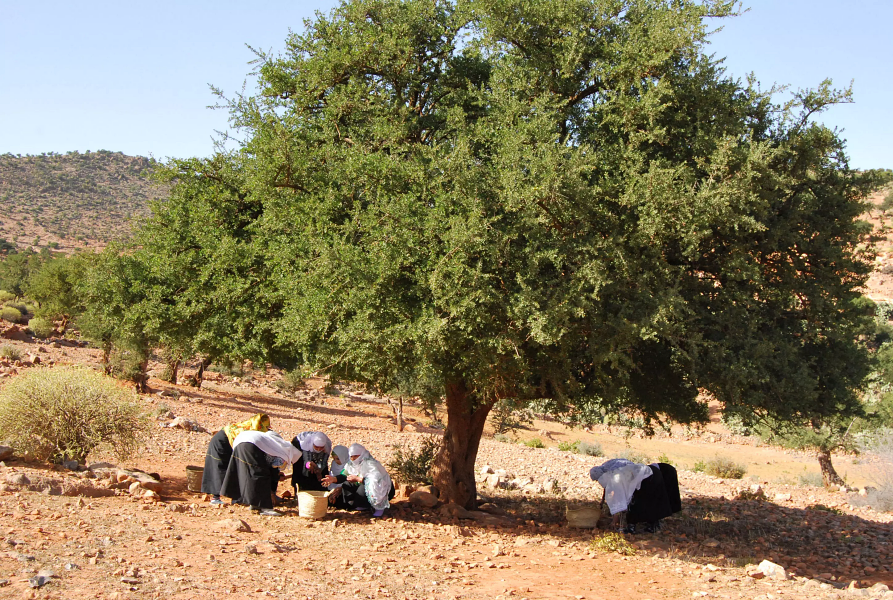 Collection of the fruits of the argan tree by women in festive atmospheres © Direction du patrimoine culturel, Maroc, 2013
Amal began as a modest gathering of women determined to turn their skill into self-sufficiency. Through training, fair wages, and shared ownership, they transformed their lives and, in time, their entire community. What had once been an informal cottage activity evolved into a model of ethical production and social solidarity.
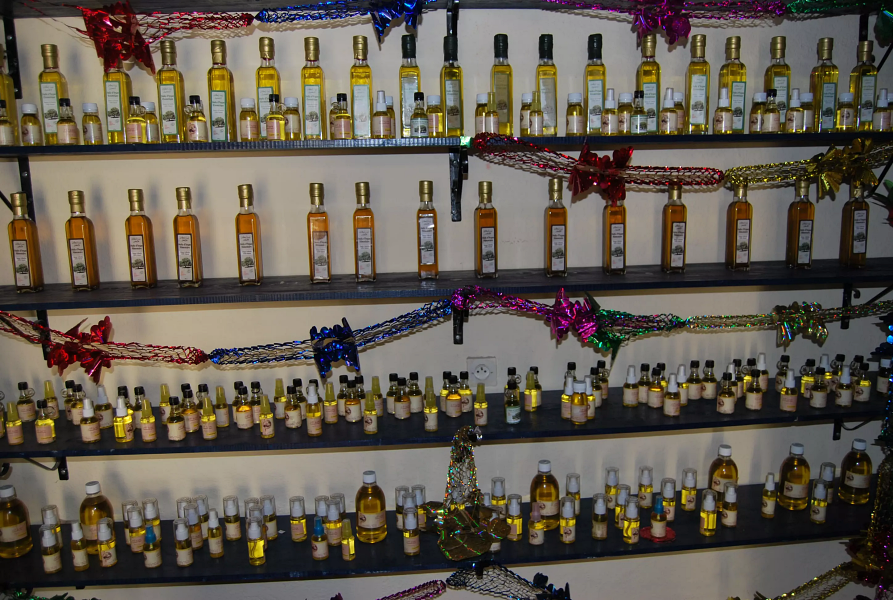
Visitors to Tamanar today can walk through the cooperative’s sunlit workrooms, where women sit in a rhythmic harmonycracking argan nuts, pressing oil, bottling Morocco’s famed “liquid gold.” Each gesture is both ancient and newly empowered, a dance of patience, precision, and pride. Amal’s success inspired dozens of similar initiatives, proving that economic equality could grow from the very soil of tradition.
Amal’s story also lives on through its sister cooperatives in Tidzi and Mesti, spreading its mission across the argan forest. Together, they form a living network of resiliencewomen working for women, protecting their ecosystem, and securing a sustainable future for their families.
Al Amal of Ighrem: Hope in the Anti-Atlas
Further south, beneath the ochre slopes of the Anti-Atlas Mountains in Ighrem, another chapter unfolded. Founded in 1991, the Al Amal Cooperative emerged from a community of predominantly Berber women living amid vast argan groves shimmering under desert light. Before its creation, opportunities were few. Women carried the weight of domestic life without access to education or income. But through the cooperative, they found both livelihood and voice. The production and trade of argan oil became a means to build confidence, education, and solidaritya pathway from dependency to dignity. Today, Al Amal stands as proof that even in the most remote villages, collective action can transform circumstance into strength. Families have been uplifted, children educated, and the once-quiet village economy now hums with activity and pride.
The Argan Tree’s Living Legacy
Across Tamanar, Essaouira, and Ighrem, the argan cooperatives are more than producersthey are custodians of a legacy. They embody the balance between people and nature, tradition and innovation, self-reliance and community care. Through the hands of these women, the argan tree continues to whisper its timeless message: that hope, when shared, becomes powerand from the heart of the Moroccan desert, that power can bloom into prosperity.
Featured Criteria
Criterion 4. Active Cooperative Connection
Sites must either remain in operation as cooperatives or be explicitly dedicated to preserving and interpreting cooperative history.
Criterion 8. Community and Member Engagement
Sites shall be embedded within their communities, ensuring active participation, ownership, and collective stewardship by local members and residents.
Criterion 12. Sustainability and Inclusivity
Sites shall embody cooperative values of social and environmental sustainability, including, gender equity, youth engagement, and cultural diversity.
Learn More