

The Modest Beginning at Toad Lane
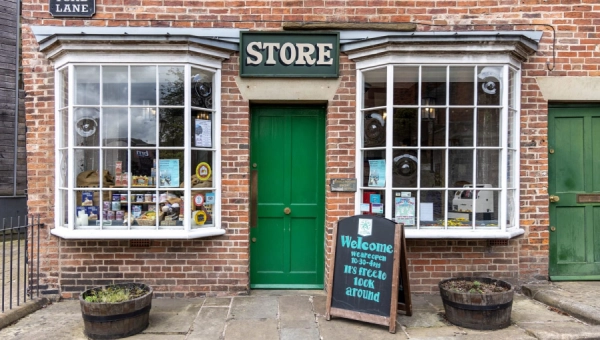
In the industrious town of Rochdale, England, stands a simple red-brick building at 31 Toad Lane,a site that changed the course of social enterprise. On 21 December 1844, twenty-eight weavers and artisans, weary of exploitation and poor-quality goods, united to form the Rochdale Society of Equitable Pioneers. Their small shop offered fair prices, honest weights and measures, and quality goods,values revolutionary for the time.
From this humble experiment emerged the Rochdale Principles, a framework that came to define cooperative practice across the world: voluntary and open membership, democratic control, member economic participation, education, cooperation among cooperatives, and concern for the community.
Holyoake House and the National Co-operative Archive
Just a short journey away, in the centre of Manchester, lies Holyoake House on Hanover Street,the home of the National Co-operative Archive. Together with the museum, it forms part of Britain’s “Co-operative Quarter,” preserving the intellectual and cultural legacy of the movement. Completed in 1911 in honour of reformer George Jacob Holyoake, the building reflects the movement’s commitment to education and social progress. Within its walls are manuscripts, rare books, periodicals, photographs, and films documenting the cooperative journey from the 19th century to the present. Researchers, students, and visitors explore subjects ranging from early retail societies and wartime contributions to the roles of women, cooperative education, and the international spread of mutual aid. The archive provides a deeper, documentary dimension to the experience of Toad Lane,revealing how cooperative ideals adapted through industrialisation, global expansion, and the challenges of modern consumerism.
The Rochdale Pioneers Museum
Today, that same site is home to the Rochdale Pioneers Museum, managed by the Co-operative Heritage Trust. It combines the original 18th-century warehouse,once the Pioneers’ store,with a modern exhibition space that connects visitors to nearly two centuries of cooperative history. Inside, one finds a faithful recreation of the original shop counter and shelves, allowing visitors to step back into the moment when cooperative trade first took form.
The museum’s exhibits unfold the story of ordinary working people who built a fairer economic model through solidarity. Displays of ledgers, weighing scales, household items, and correspondence trace how a simple consumer shop evolved into a vast network of cooperative societies. Themes such as retail innovation, social reform, and international solidarity are explored through interactive displays and archival artefacts.
The building itself, Grade II listed, stands as a national monument to social enterprise,its modest architecture a powerful reminder that great ideas often begin in the simplest of places.
A Shared Heritage of Innovation and Equality
Together, the Rochdale Pioneers Museum and the National Co-operative Archive tell a seamless story. The museum preserves the original spark,the first shop, the first members, the first principles,while the archive chronicles the fire it ignited across time and continents. Both are run by the same trust, reinforcing a shared mission: to protect, interpret, and celebrate the living legacy of cooperation. Visiting Toad Lane is not simply an exercise in nostalgia. Standing behind the recreated shop counter, one senses the courage of those first twenty-eight Pioneers,workers who dared to believe that fairness, education, and shared ownership could transform society. The archive in Manchester deepens that experience, providing the evidence of their impact,the handwritten ledgers, the advertisements, the photographs,proof that their idea endured and evolved.
The Spirit That Endures
From Rochdale’s small storefront to Holyoake’s Manchester archive, the cooperative movement’s journey mirrors a universal truth: that collective effort can achieve what individual ambition alone cannot. These heritage sites remind us that the pursuit of equity and dignity in economic life is not a relic of the past but a living challenge for every generation. In Toad Lane’s quiet rooms and Holyoake House’s reading halls, the same message resonates still,that cooperation, born of necessity, remains one of humanity’s most hopeful ideas.
Featured Criteria
Criterion 1. Historical Significance
Sites must be at least thirty (30) years old, preferably sixty (60), or directly associated with foundational events, milestones, or figures in the cooperative movement.
Criterion 2. Connection to Cooperative Pioneers or Communities
Sites must demonstrate a tangible link to cooperative pioneers, enterprises, federations, or communities that shaped cooperative practice and identity.
Criterion 3. Archival, Architectural, or Symbolic Value
Represents milestones in cooperative development. Preserves stories, traditions, or knowledge tied to cooperative evolution.
Learn More